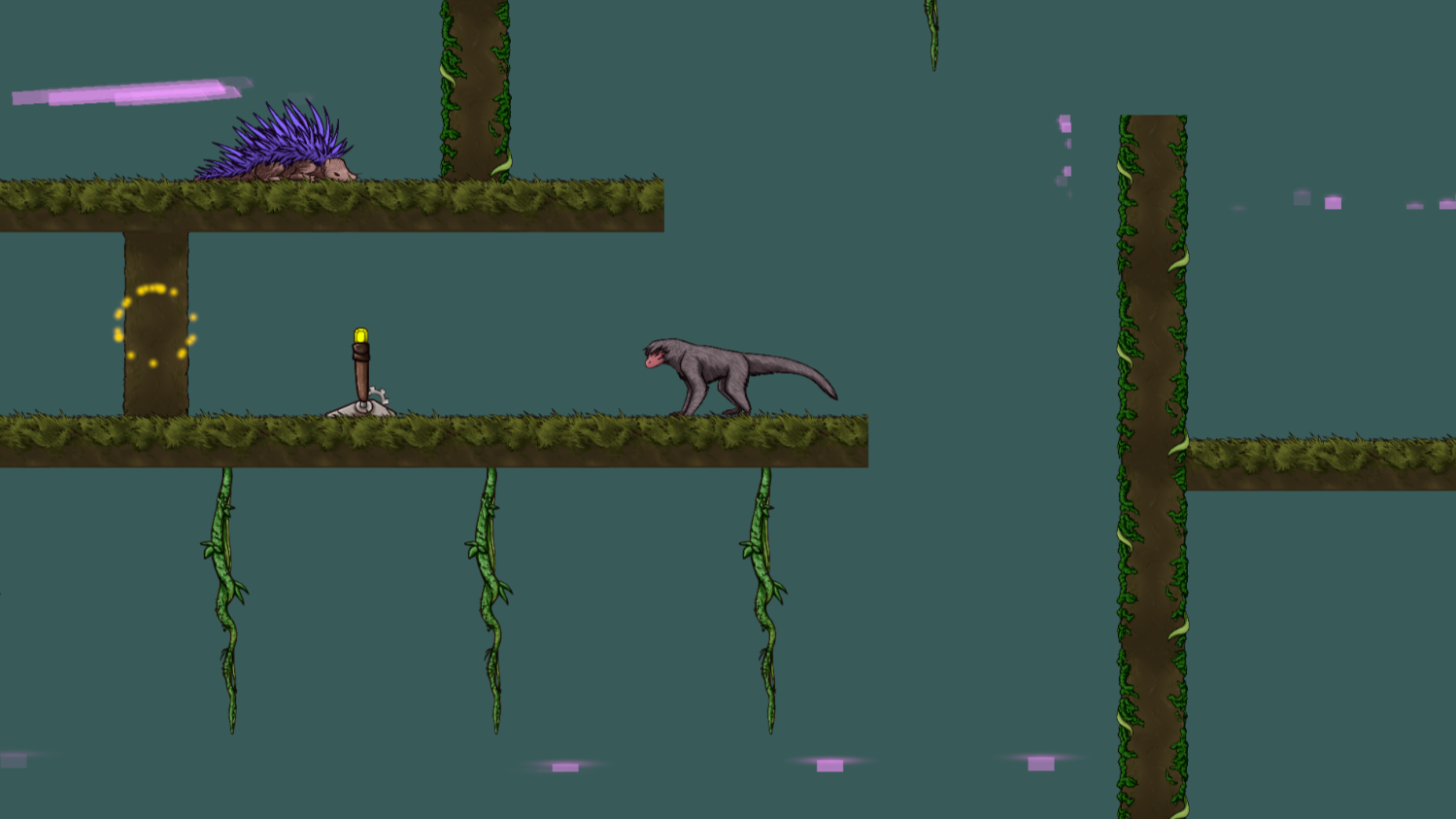

Monkey (Don't) See is a 2D platformer where you must sacrifice part of your sight each time you die.
The player starts out with a total of five eyes, each allowing them to perceive a
specific element of the level, either related to obstacles (enemies, hazardous water,
incoming danger) or traversal (climbable surfaces, secret passages). After each death,
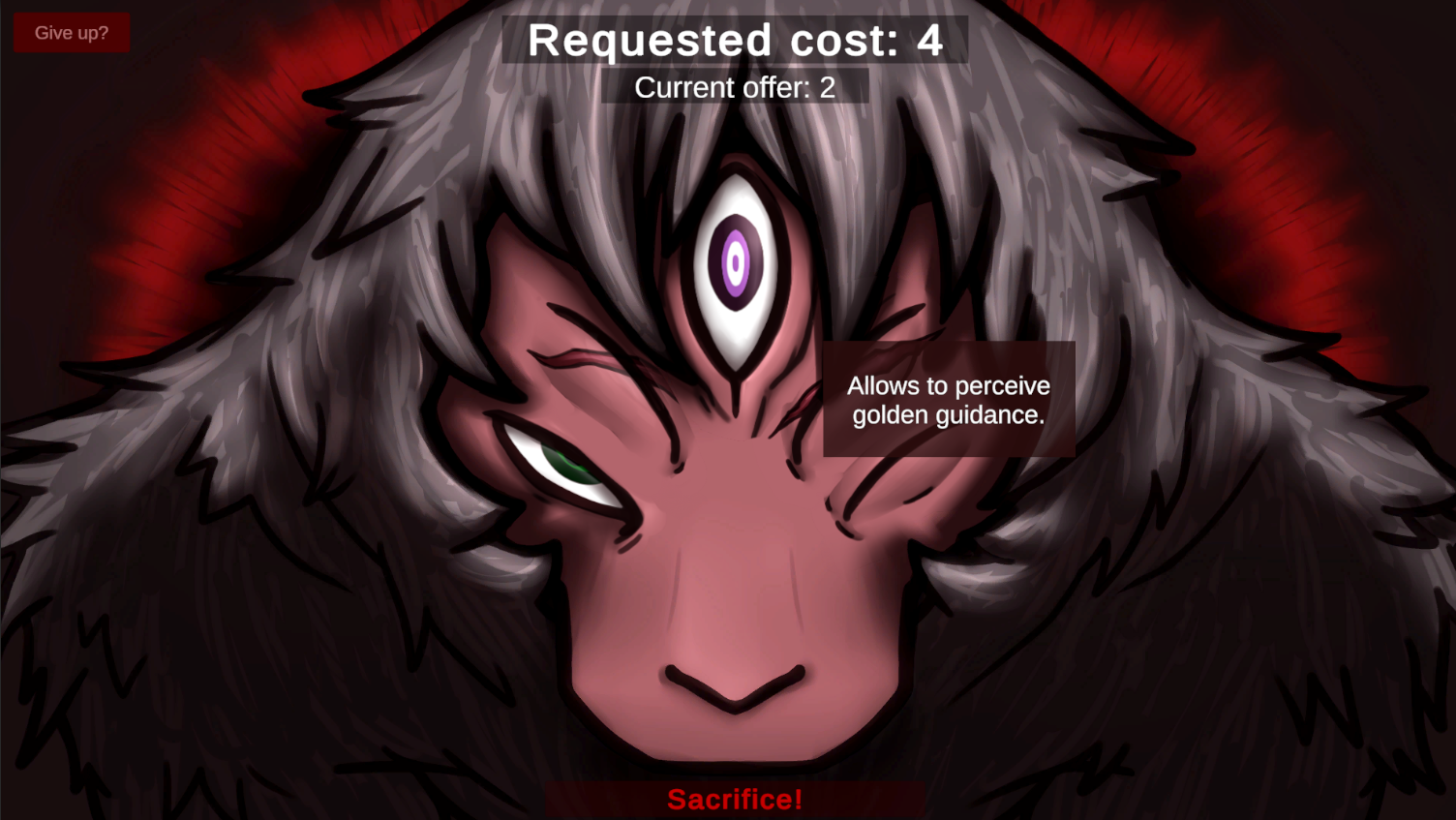
the player can choose to either restart the level from the beginning, or to sacrifice
one or more eyes to be resurrected on the spot. Losing a certain eye will render the
related element completely invisible to the player for the remainder of their attempt.
The cost for a resurrection increases with every death, and the player can choose in
the order in which to sacrifice each eye depending on their use and value. If the player
finds an altar, they can instead choose to immediately sacrifice a random eye to guarantee
a resurrection on their next death, without increasing the sacrifice cost.
The loss of eyes should increase the game’s difficulty, as it’s the condition the player
accepts in order to avoid a setback, but it should not make progression impossible.
A determined player should be able to finish the level even if lacking any or all eyes.
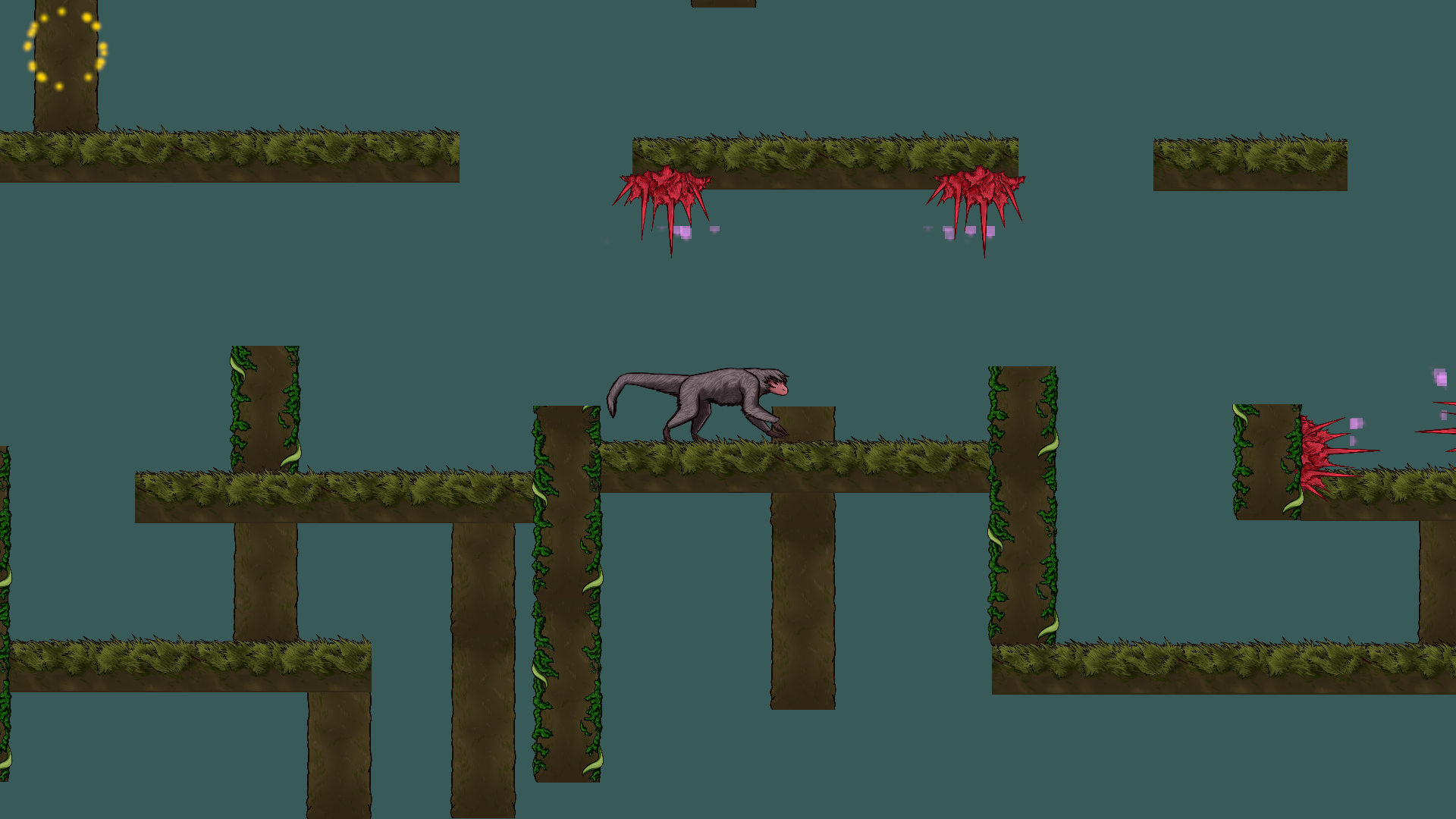
The various level elements were designed with clear rules regarding their positioning and
behavior: for example, spikes can only be found at the edges of platforms, and hazardous
water is always contained between two vertical platforms. The quills of enemies are always
the same height, and secret passages are always placed between two horizontal platforms.
Some areas can be accessed only through the activation of colour-coded levers placed
in other parts of the level. If the colour matches that of a sacrificed eye, the connection
between specific levers and doors will be hidden, but the elements themselves will not
disappear.
By observing these elements, memorising their rules, and analysing the shape of the level,
the player will be able to predict the presence of dangers or options for traversal even
without having to see them.
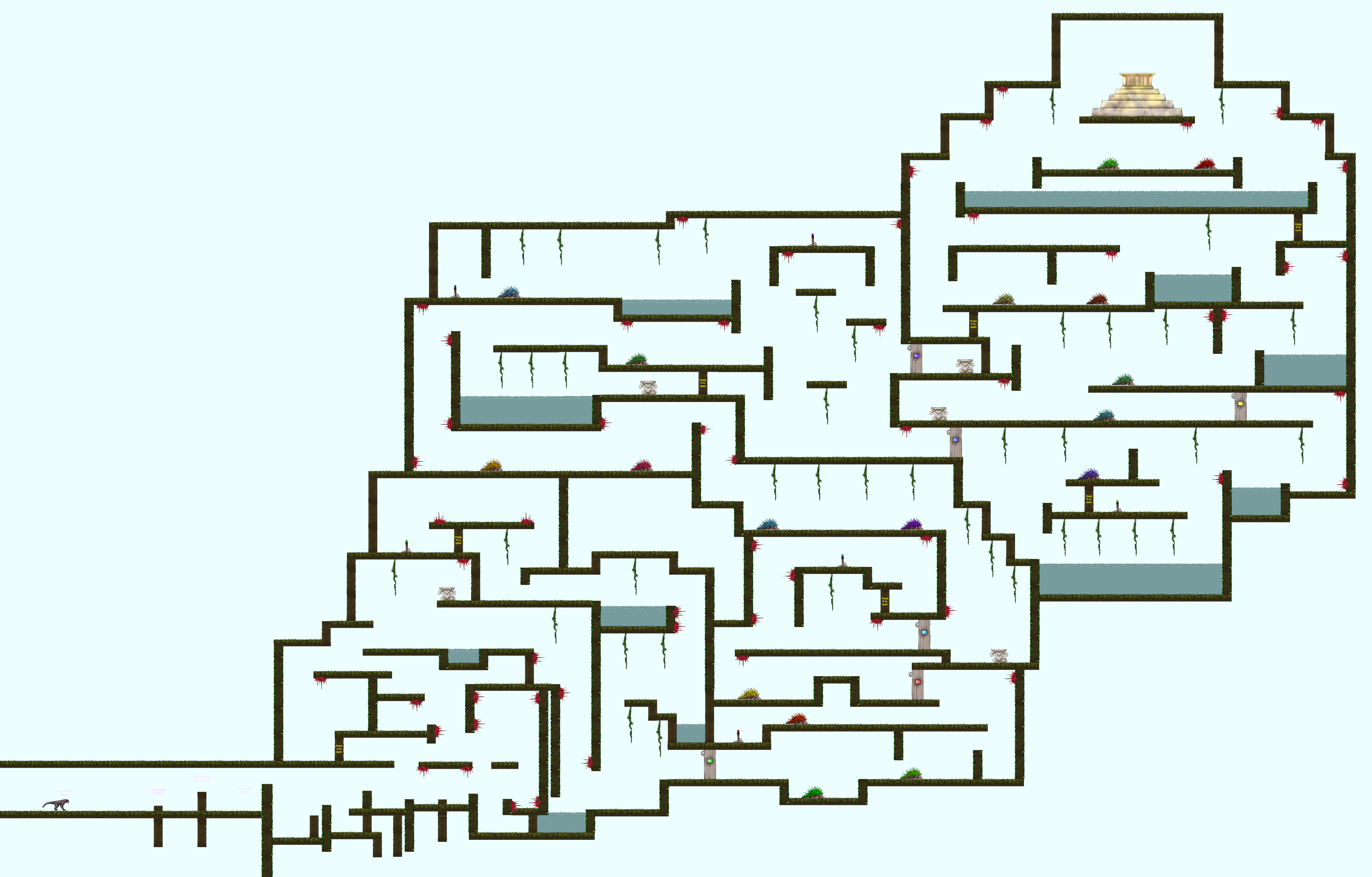
Level layout
The game features a single macrolevel, divided into five smaller sections. The level must
be a single continuous unit, requiring the player to reach the end in a single attempt,
in order to encourage interaction with the sacrifice mechanic. The smaller subdivision,
meanwhile, allows the gradual introduction of level elements, so that the player can focus
on and learn each without being overwhelmed.
Each microlevel is also bigger and of a more complex shape than the previous, requiring the
player to familiarise with the traversal mechanics and grow more precise in their movement.