Guild Rush is a single-player autochess game where you put together a guild
of unique characters to lead them to victory despite the unpredictability of battle.
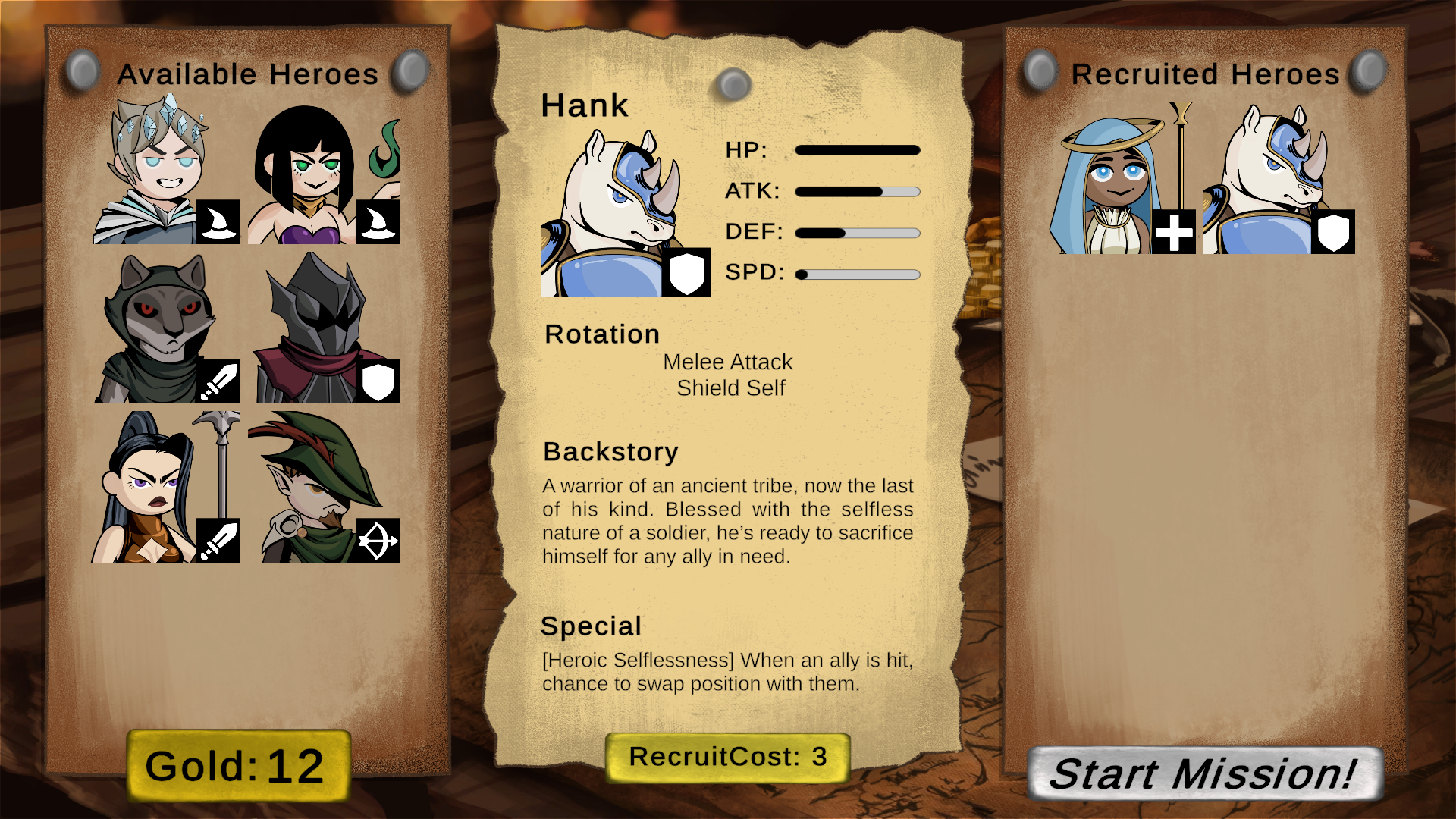
The game is divided in two phases: first, the player must use their coins to recruit
heroes from the tavern. Then, they must win the three battles in a mission to earn more
coins and return to the tavern, to recruit more heroes and face another mission.
Every hero the player can recruit is characterised by their unique personality, moves, abilities.
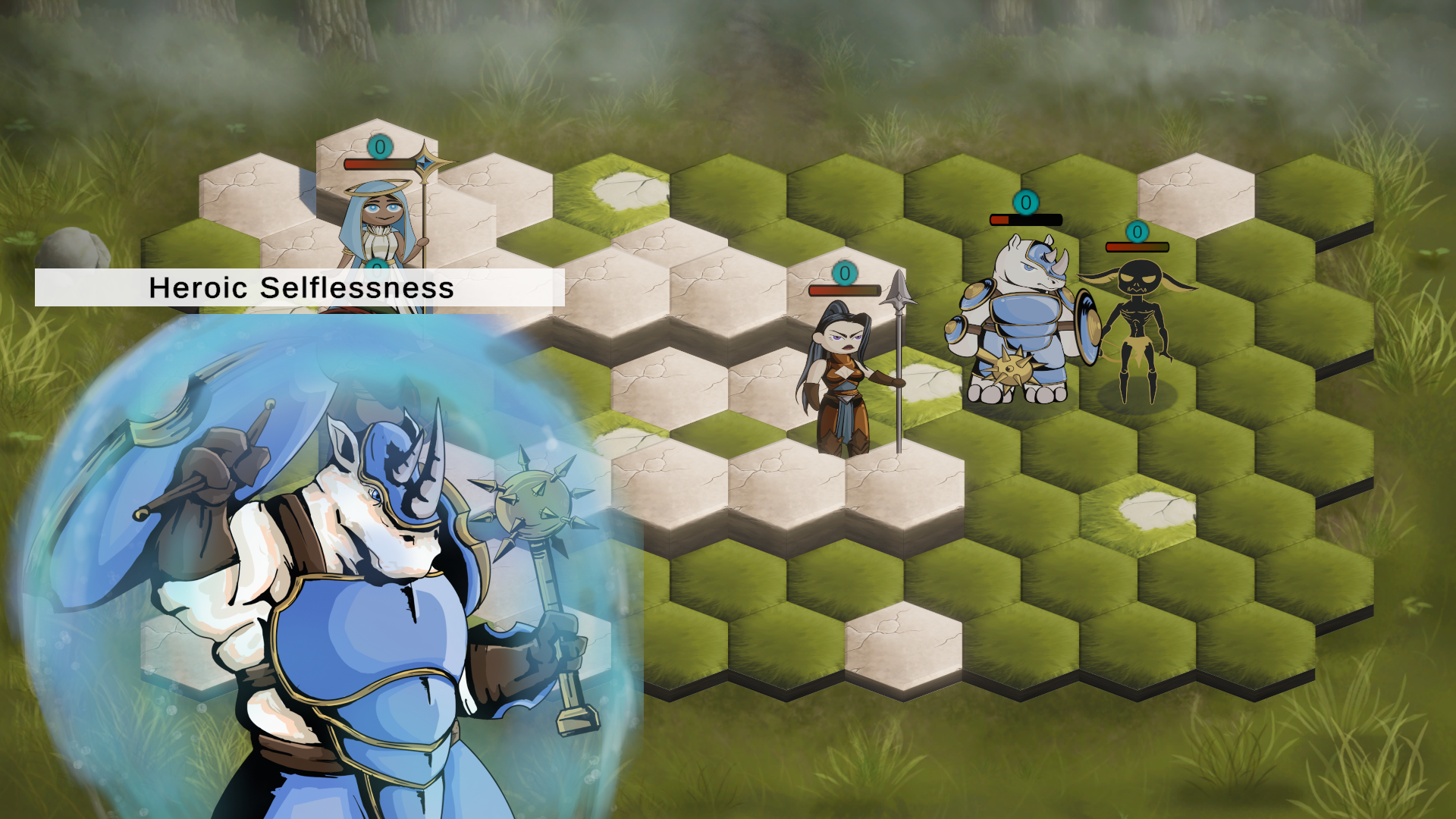
During battles, each hero can perform their Special, a distinctive behaviour activated by certain
conditions outside of the player’s control. For example, Hank the Tank might swap positions with
a nearby ally who was recently hit, or the healer Elimine might flee the battle if more two allies
have been killed. In this way, the heroes are more than simple units, instead becoming independent
characters which the player can become attached to.
I was one of two game designers working on the project. We collaborated on updating the GDD,
UI/UX, and unit stats, and testing. I personally focused on designing the battles and missions,
tavern phase, and the enemy units.
As team leader, I organised and assigned tasks, updated the asset list, and kept progress logs.
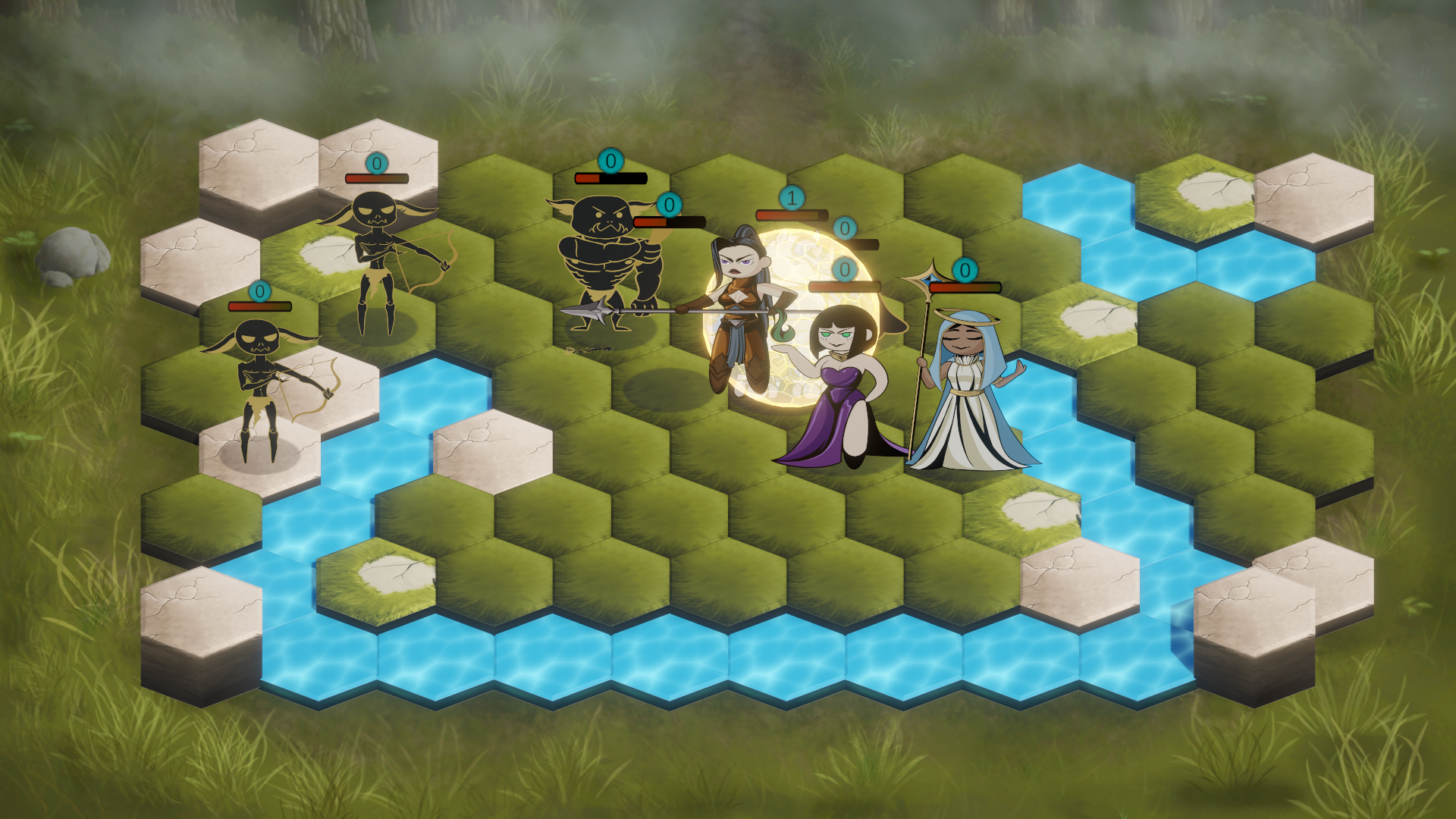
Missions are the main form of progress in the game. The first mission serves to introduce the mechanics, the second to expand on them, and the third as a final challenge. The units don’t scale in stats, but each successful mission is worth more coins than the previous, allowing the player to compose a more powerful team. Each mission is composed of three consecutive battles, and every hero that is defeated during a battle will be unavailable until the player returns to the tavern. Battles take place on a 8x10 grid of hexagonal tiles, with every unit being able to move to all adjacent tiles. Enemies are already placed on the field from the start, while the player can place each of their units within a specified area of tiles, before initiating the battle. Some special tiles act as obstacles, preventing unit movement and, depending on their height, melee attacks only (water tiles) or both melee and ranged attacks (rock wall tiles).
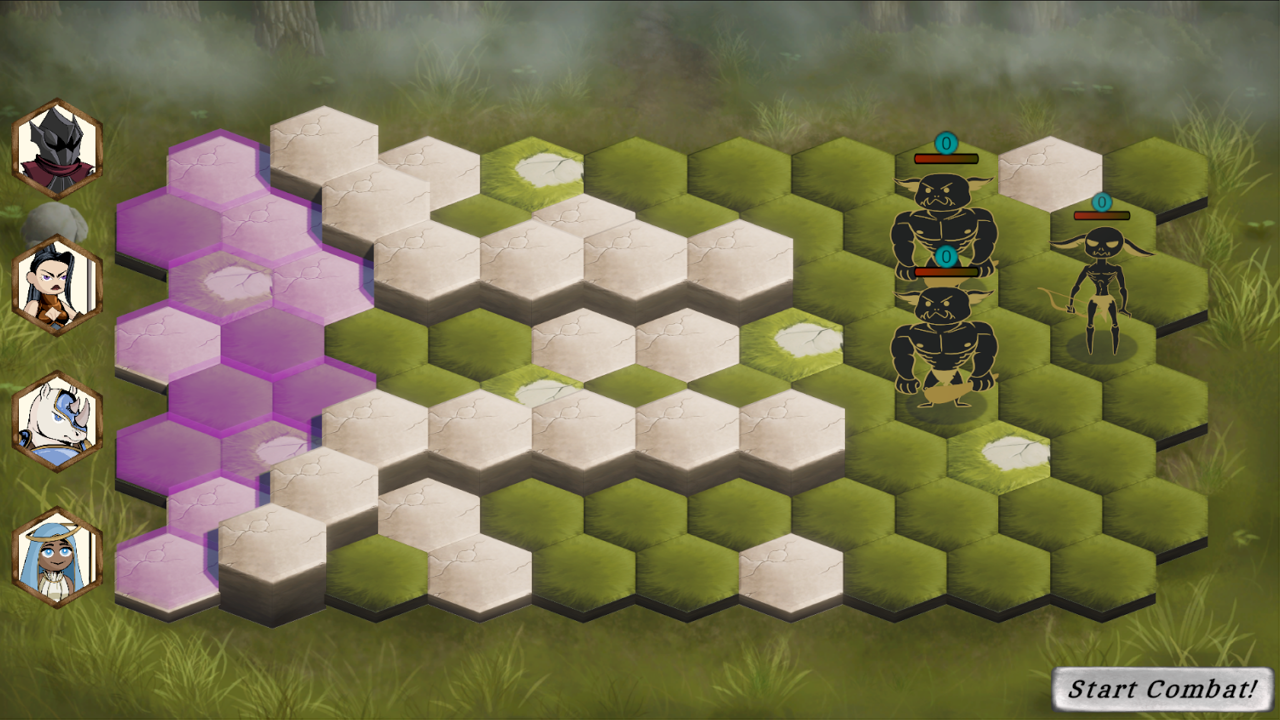
The last of the first mission, the objective of this battle is to reinforce the player’s understanding
of obstacles and the importance of unit placement. The tall obstacles create a corridor, clearly
demonstrating the field’s navigability. It also severely reduces the available space, forcing a maximum
of two pairs of units to fight at a time: this makes the correct placement of heroes essential to win
the battle, ensuring that the player is able to properly apply this essential element of the strategy
before proceeding to the rest of the missions.
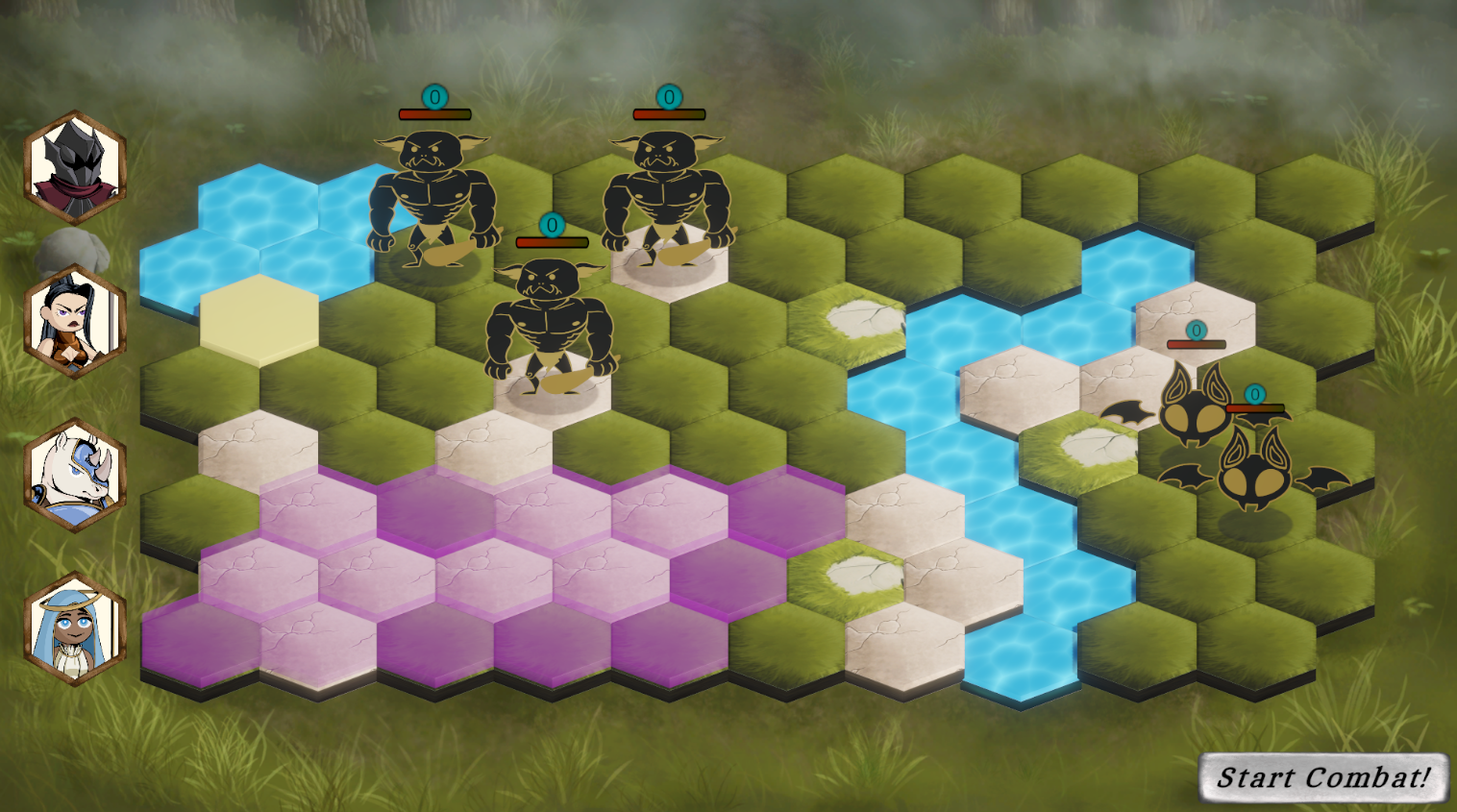
This battle serves as an opening to the second mission. It introduces a new enemy unit, placing it
alongside the ones already familiar to the player in order to compare their differences. The new Bat
unit is initially placed behind normally inaccessible water tiles, to demonstrate its unique ability
to fly directly over them and skip the obstacle entirely. It’s a low-difficulty battle, with a small
number of enemies, to allow the player to concentrate fully on the new unit.
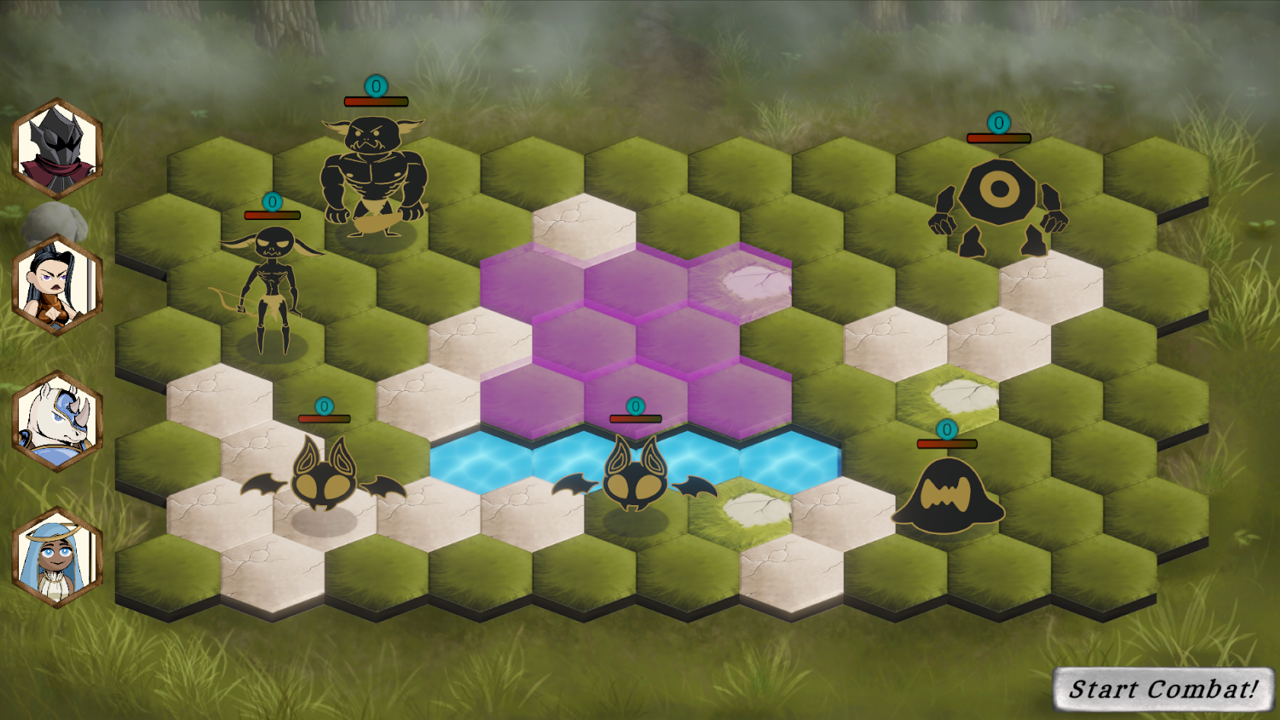
Being the second to last in the game, this battle tests the player’s adaptability and knowledge of the game by subverting their expectations and preventing them from relying on old strategies. The hero units start out surrounded by different enemies, with no tall obstacles to use as cover: good unit placement must follow careful examination of the different threats, prioritising the right enemies to reduce unit damage.
Each enemy was designed to cover a specific role, differing in stats, attack types, and abilities. They had to be carefully placed on the battle fields as, with such a low number of player heroes, the addition of even a single enemy unit could drastically affect the battle’s difficulty. They contrast heroes by being generic, highly replaceable creatures: while easily recognisable in silhouette, they all share a simple, unchanging colour scheme, clearly distinct from all of the player’s unique units.
Being an autochess, Guild Rush inherently limits the player’s agency. We wanted to reduce this potentially frustrating element, but without losing the game’s identity. As such, the battle system heavily revolves around unit placement and the creation of synergies between the various available heroes. Furthermore, entertaining elements beyond the gameplay were added so that the player might always have something to look forward to: the heroes are characterised with internal narratives, battles are flashy and high-stakes, and whenever a hero’s Special is triggered, the battle slows down and the character’s full splash-art is shown.