Antura: Discover is an educational game that teaches about European culture through
exploration, character interaction, and minigames.
Antura is an open-source project that aims to teach children through the video game medium.
The original game focused on teaching languages and reading. The new Discover section,
which I worked on, expands to teach the culture of some European countries as well.
The game is designed to be played in class, by children attending elementary school.
For this reason, it is lightweight, portable (including builds for mobile platforms),
and using simple input schemes. Each play session should be short, so that it can be
followed up with a pertinent lesson by the teachers. The content of each quest is suggested,
and later validated, by teachers from the relevant countries.
I was hired as a junior designer for two months, in preparation for the game’s beta. My tasks were to further develop quest drafts, design minigames, implement quests in engine, find necessary CC0 images for the project, and testing.
I was given some quest drafts to develop and finalise so that they could be implemented. The topics and facts presented by the quests had been provided by teachers, and a loose gameplay direction was often present. I greatly expanded the drafts, following the outlined experience and preserving the teaching content, but updating the gameplay to respect the project’s equirements and limitations.
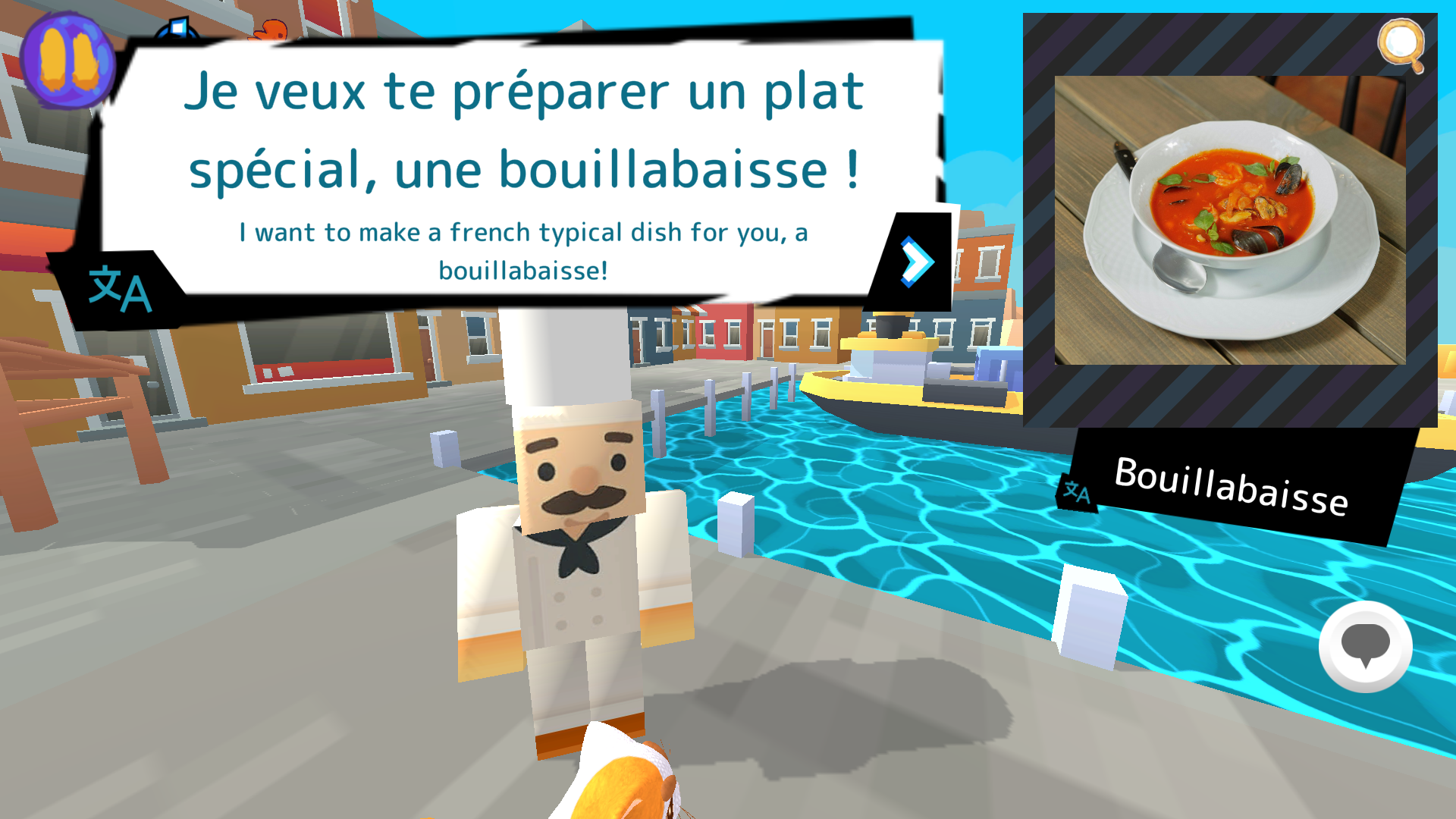
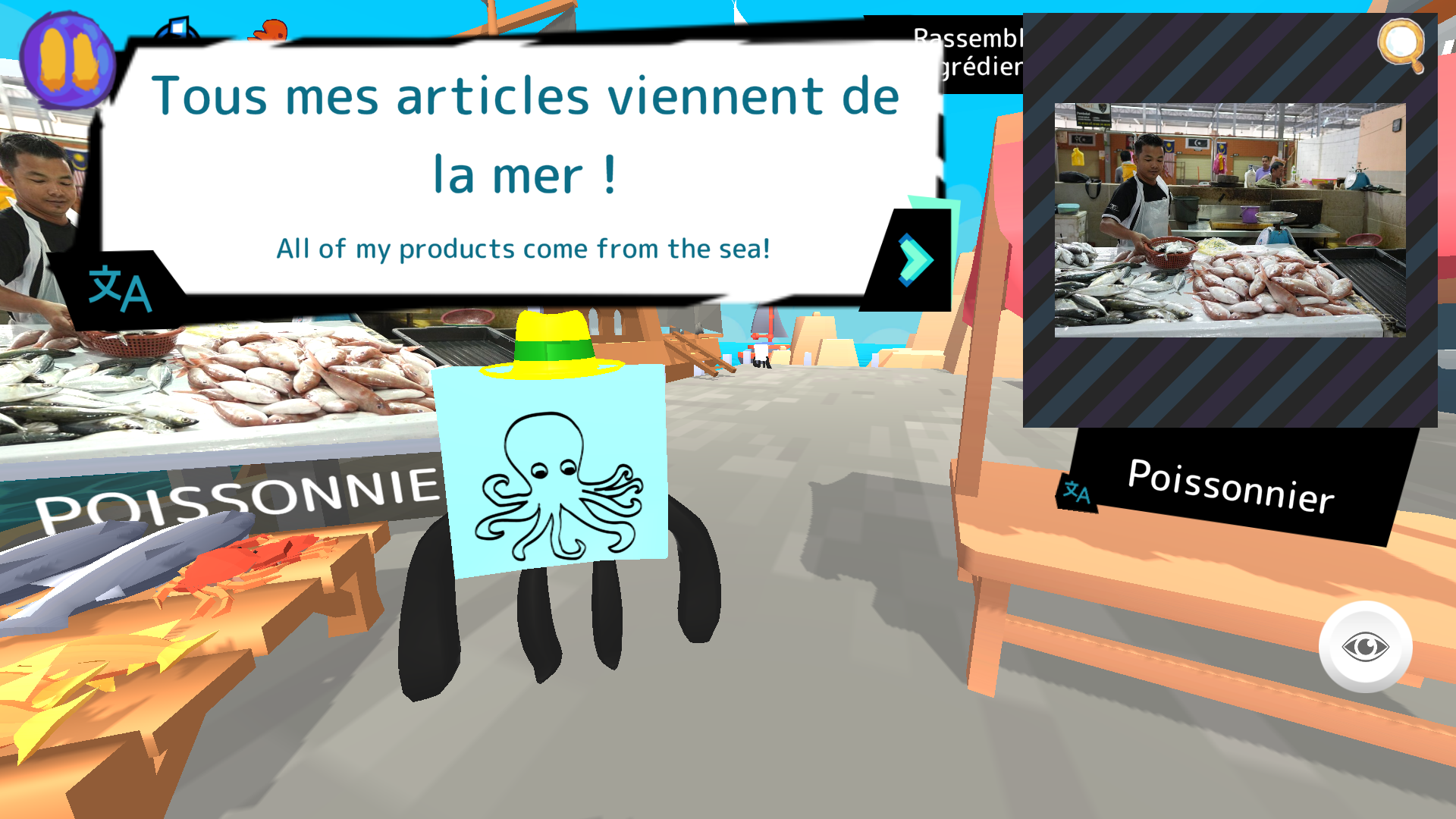
A character giving Task instructions
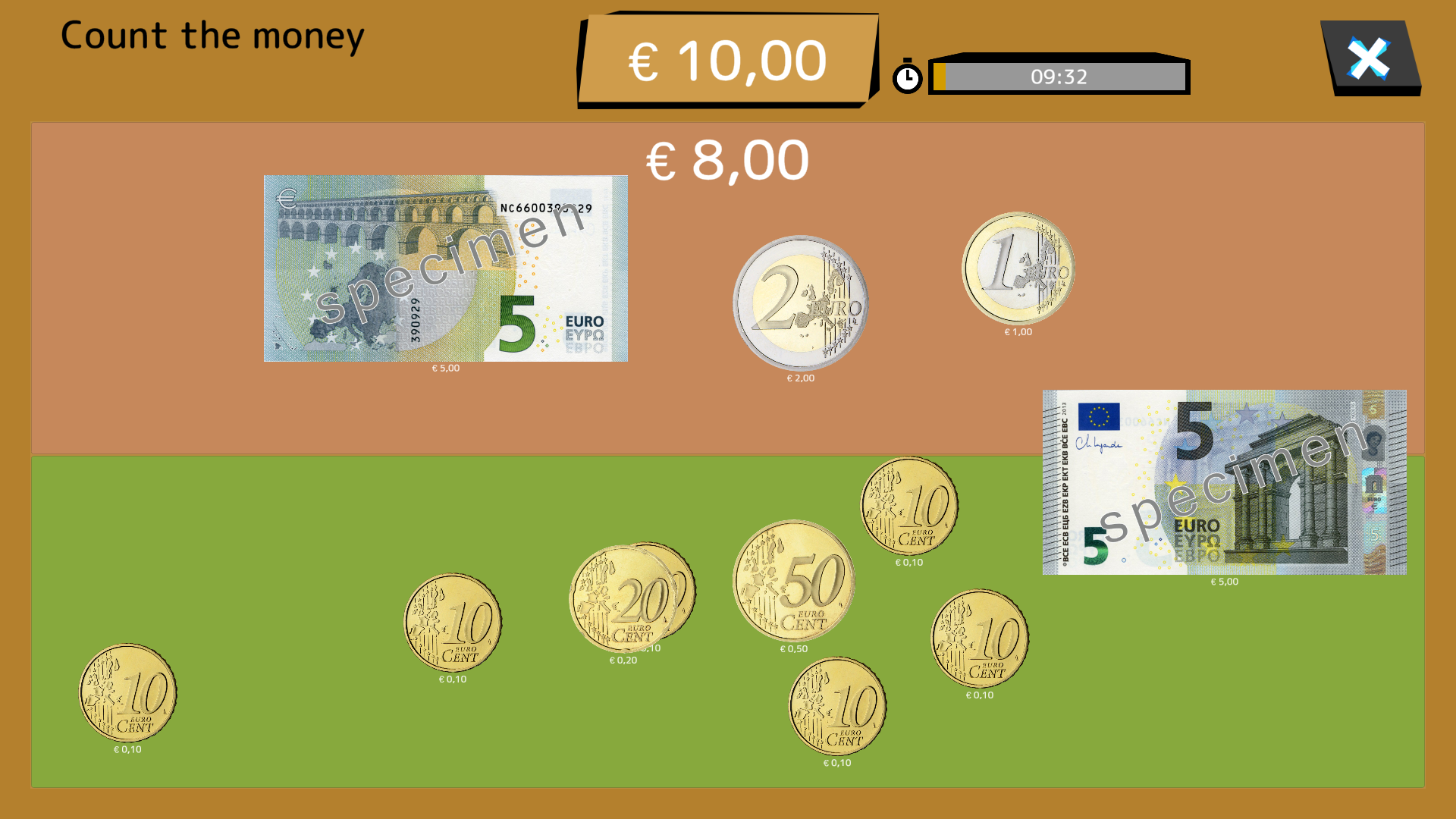
The money counting minigame
I integrated opportunities for learning throughout the entirety of quests: aside from the spoken
interaction with quest characters, who outline the themes and directly communicate facts to the player,
progress within quests is also bound to spatial navigation, minigames, and conscious examination.
I often replaced a simple interaction from the draft with a more interesting and involved puzzle for
the player.
For example, in one quest, accessing the requested items requires the player to choose
the relevant and respectful dialogue option, and then count enough money to pay for it.
The minigames were developed to offer more frequent interaction to the player, and often act as a condition to advance the quest. They’re short and intuitive, tactile and satisfying to complete. They include traditional games of widespread appeal, such as jigsaw puzzles and matching cards, and tests of dexterity or logic, such as clearing a canvas or counting coins. Thanks to their self-contained nature, they could be injected throughout a complete quest, or tied directly to progress.
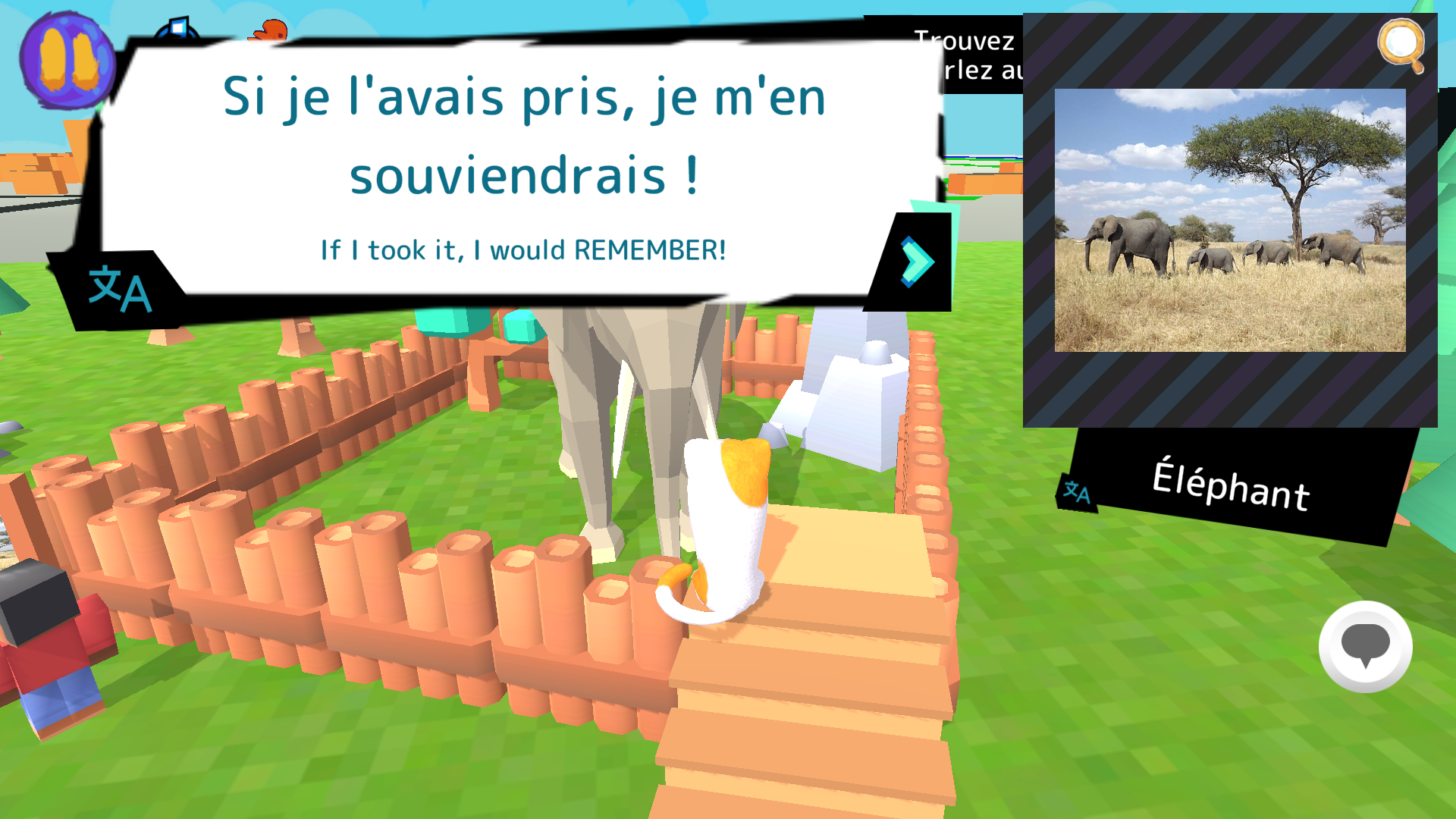
Elephant facts
In Antura, a quest’s setting and narrative are mainly communicated through text, spoken by the characters upon player interaction. Each text box holds a small amount of text, so as to appear clear and legible to the player: as such, the dialogue must be written in a very simple and direct form, understandable even when broken up in short sentences. I made sure to characterise the dialogue whenever possible, combining clear explanations with memorable facts regarding each character.
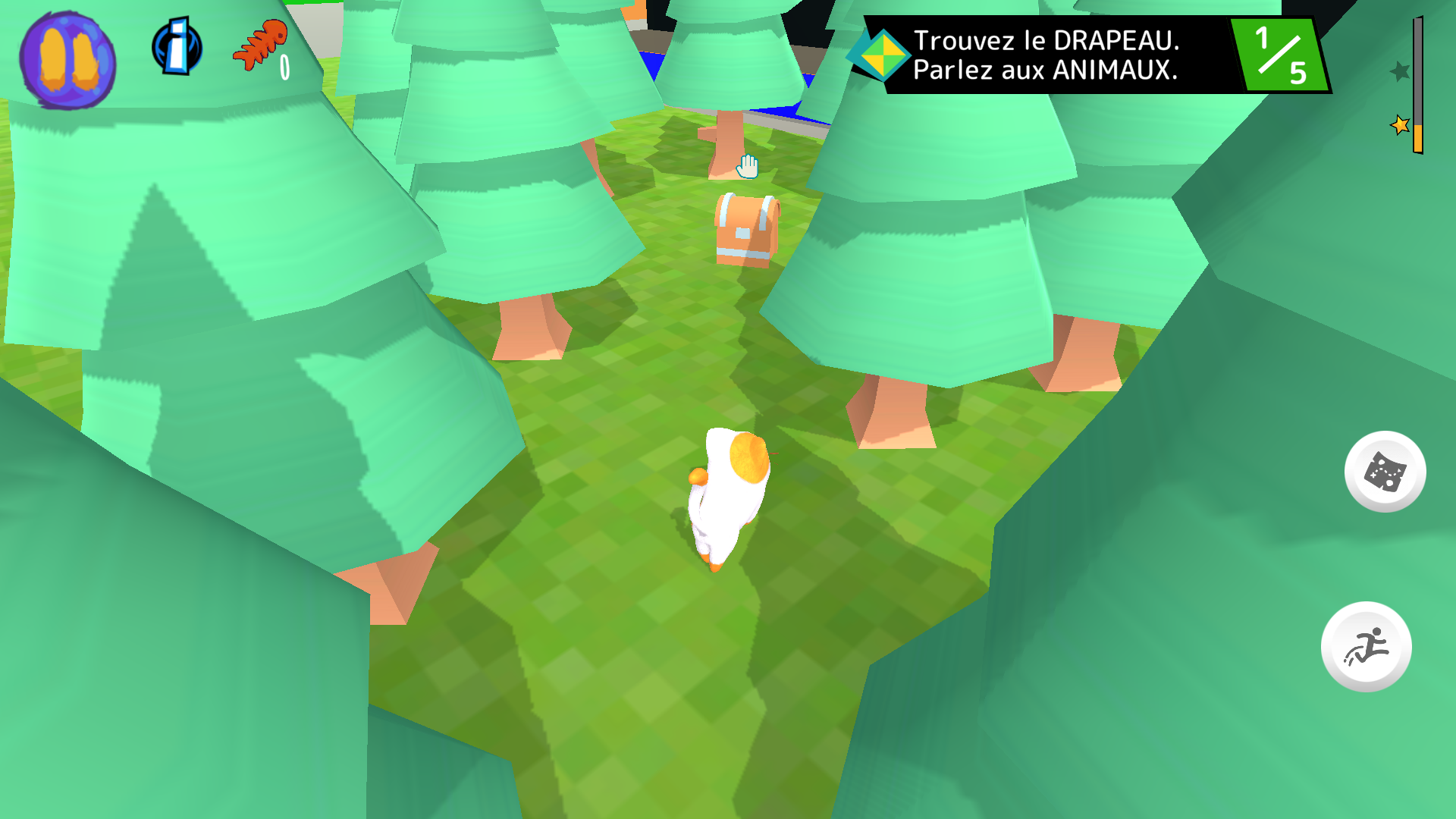
A secret reward
Once the quests I’d revised had been validated, I worked on their implementation in engine.
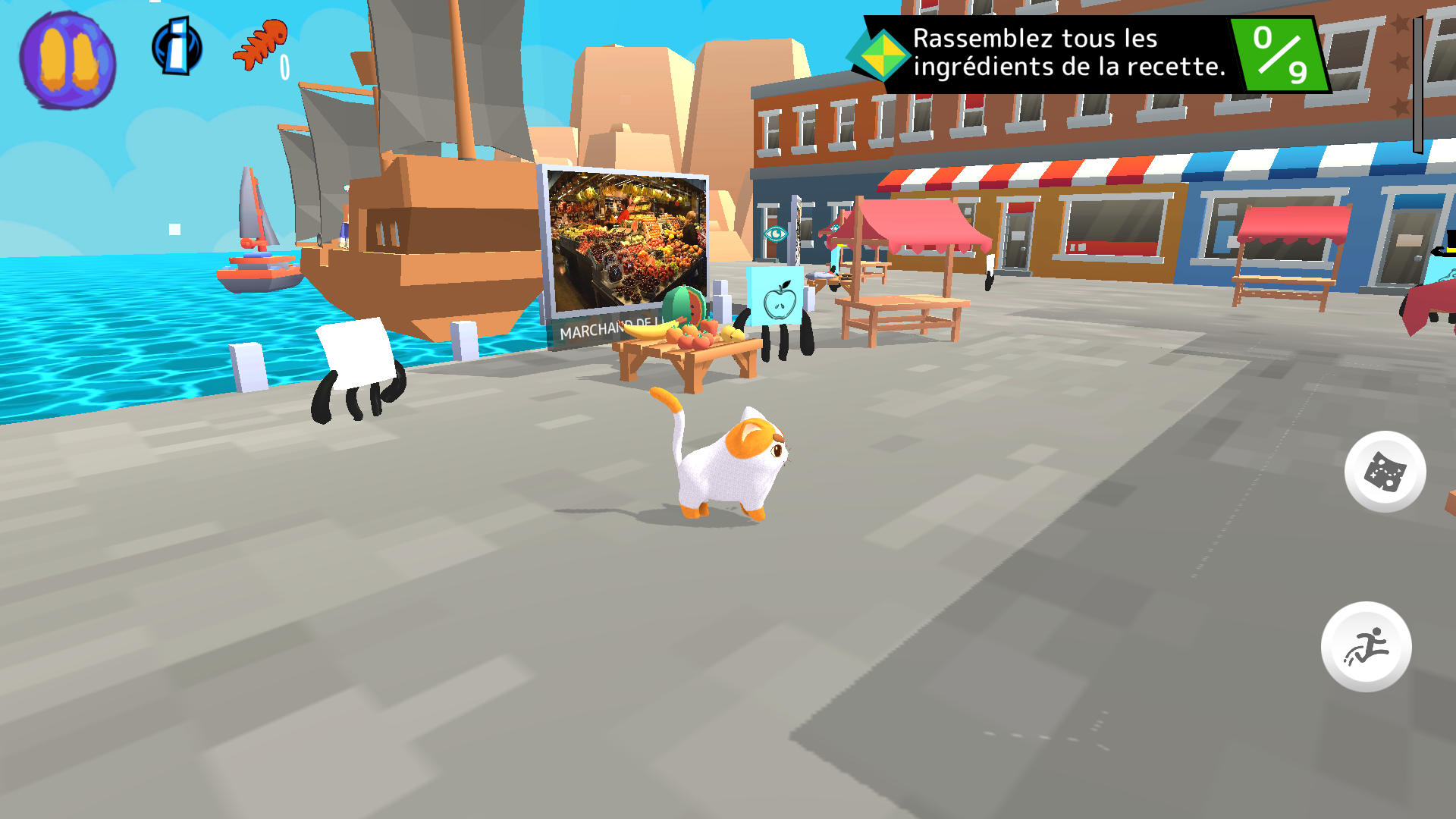
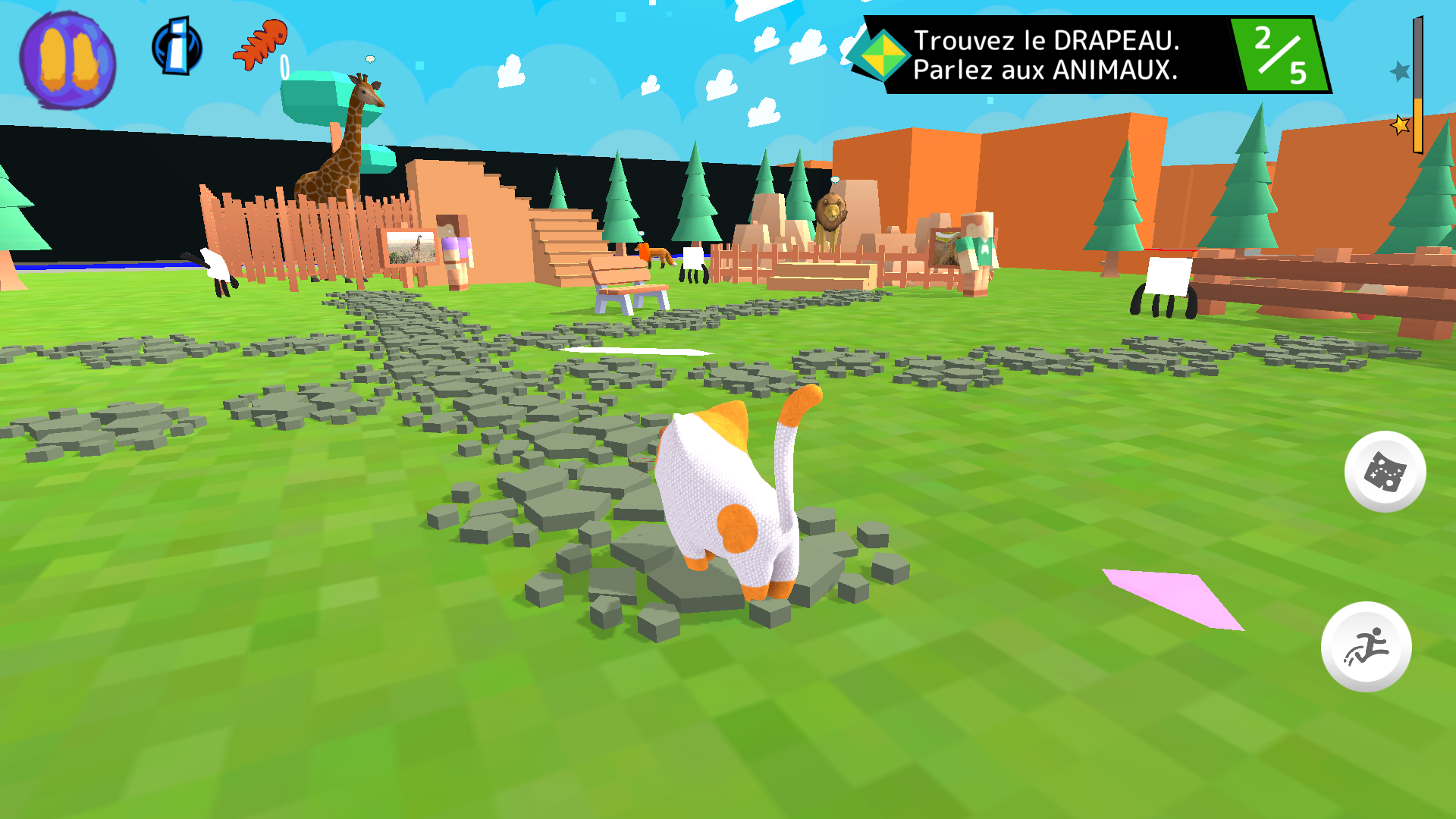
I created the environments for each quest using the available models and set up the interactable
characters. The layout of the scene follows the quest progression, gently guiding the player
through the various interactions in the desirable order. The addition of decorations, secrets,
and bonus collectables creates a more engaging and detailed game space for the player to explore.
The project uses the tool YarnSpinner to manage the dialogues. I adapted the previously-written
dialogue to Yarn scripts to create the playable quests, making use of the project’s bespoke
functions available to me to start minigames, activate objects, integrate small animations,
and keep track of quest progress.